Japandi vs Scandinavian: how to choose for a small apartment
Both styles are calm, light and functional, yet they behave differently in 30 to 50 square metres. Compare palette, wood, storage, lighting and upkeep, and use a simple test to choose the one that suits your flat and your habits.
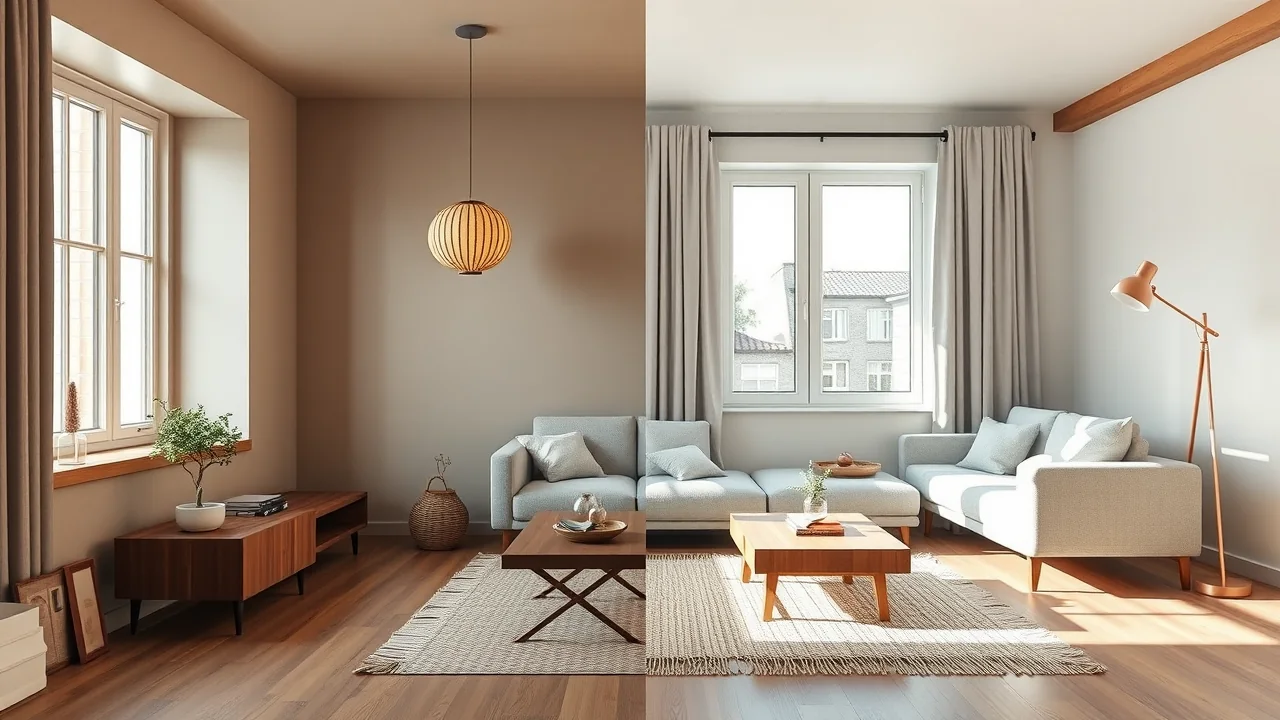
Japandi and Scandinavian are the two styles people most often shortlist for a small apartment, and for good reason: both prefer calm surfaces, natural materials and furniture that earns its place. They are cousins, not twins. Scandinavian design is about brightness, warmth and everyday comfort. Japandi blends that practicality with Japanese restraint, which brings darker accents, more empty space and an attention to craft. In 30 to 50 square metres these differences decide whether a room feels airy or heavy, so it is worth choosing deliberately.
The short version
Choose Scandinavian if your flat is dim, you need maximum brightness and you like a cosy, lived-in look. Choose Japandi if you own few things, love quiet textures and want a room that feels like a pause. Both work in small spaces; they just reward different habits.
Palette and light
Scandinavian rooms start from white or a very light warm grey and add small, bright accents: a mustard cushion, a blue poster, a green plant. The goal is to bounce as much daylight as possible, which is why it works so well in north-facing rooms and under low ceilings.
Japandi uses a more muted, earthy palette: warm beige, clay, sage, charcoal and soft black. The walls are rarely pure white, and a deep tone appears in small doses, often on the furniture or a single textile. In a bright, south-facing room this looks calm and sophisticated. In a dim room, too many dark notes can make 30 m² feel like 25.
Wood and materials
Scandinavian furniture is typically made of pale woods such as birch, pine and ash, often with a clear lacquer. Metal and glass stay thin and light. The surfaces are smooth and uniform.
Japandi prefers a mix: a warm oak or walnut next to a pale ash, with matte ceramics, linen, paper lamp shades and rough stone. Visible joinery and slightly imperfect surfaces are part of the charm. If you like touching your furniture, Japandi gives you more to touch.
Furniture shapes
- Scandinavian: soft, rounded edges, tapered legs, a sofa with thick cushions, and storage that looks friendly.
- Japandi: low, calm silhouettes, clean joinery, a sofa that sits closer to the floor, and fewer pieces overall.
In a small room low furniture creates more visible wall and more perceived height, which is a real advantage of Japandi. On the other hand, a very low sofa is harder to get out of, so test it before buying.
Storage and clutter
This is where the two styles diverge most. Scandinavian design happily shows books, plants and a few favourite objects on open shelves. Japandi hides almost everything: closed cabinets, flat fronts and a single curated shelf. If you have a lot of belongings, Japandi will force you to build more closed storage, otherwise it just looks messy. If you own little, it will feel like a luxury.
The question is not "which style is prettier", but "which one will still look good when real life arrives".
Lighting and textiles
Scandinavian lighting is warm and layered: a pendant, a floor lamp and candles, ideally at three different heights. Japandi favours diffused light, such as paper shades and indirect cove lighting, with fewer fixtures. In both styles use 2700–3000 K bulbs. Cold light kills the natural materials in either case. Add a dimmer to the main light: it costs little and changes the mood more than any cushion.
For textiles, Scandinavian leans on wool throws, sheepskins and patterned cushions. Japandi sticks to linen, cotton and wool in solid, muted colours with one textured piece, such as a boucle chair or a woven rug.
Budget and upkeep
Scandinavian furniture is widely available across price ranges, so it is easier to build gradually. Japandi often relies on solid wood and good ceramics, so the first pieces cost more, but a few well-chosen items go a long way because the room needs less. White surfaces in Scandinavian rooms show every mark, while Japandi's mid-tones forgive dust and fingerprints. Whichever you choose, buy the sofa first: it is the largest object and sets the tone for everything around it.
A five-minute test
Answer these four questions honestly:
- How much daylight does the main room get? Little means Scandinavian, plenty means either.
- How many things do you own that must stay visible? Many means Scandinavian, few means Japandi.
- Do you want cosy or calm? Cosy is Scandinavian, calm is Japandi.
- Will you tolerate a visible mark on pale surfaces? If not, choose Japandi mid-tones.
If you answer two and two, mix them: a Scandinavian base of white walls and light floors with Japandi accents in oak, ceramics and linen is one of the most successful small-flat combinations.
See both before you decide
Reading about styles is not the same as standing in them. In 3DRoom you describe your room once and then switch the whole design between Japandi and Scandinavian in a tap. The layout, furniture, materials and lighting change in true size, so you can judge the real effect in your own dimensions, and keep both versions for comparison.